
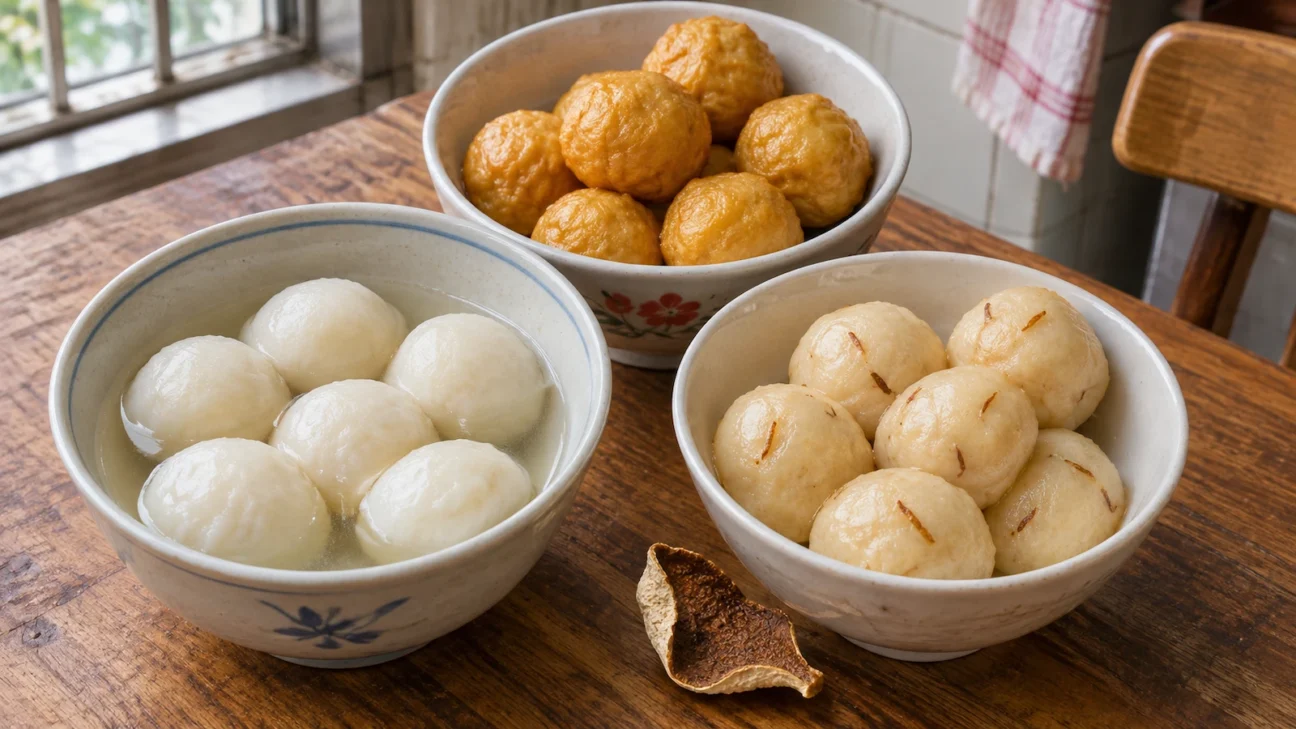
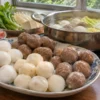
Hong Kong has no fixed number of fish ball varieties. Choose by what you are cooking. White fish balls suit clear noodle soup, fried fish balls make good curry fish balls, and dried tangerine peel fish balls add a citrus aroma.
Hong Kong has no single standard for classifying fish balls. Shops and brands can name them by appearance, preparation, size, shape or flavour. It is more useful to know how to serve each kind than to count them. This guide compares three familiar choices:white, fried and dried tangerine peel fish balls. Choose among them for noodle soup, hot pot or curry fish balls.
Table of Contents
How many types of Hong Kong fish balls are there?
Hong Kong shops sell more than white, fried and dried tangerine peel fish balls. Some use their own names based on size, shape or flavour, so there is no count that applies to every shop and brand.
For everyday cooking, start with these three choices:
- White fish balls:Recognisable by their pale colour. Often served in noodle soup, clear broth and hot pot.
- Fried fish balls:Usually yellow to golden after frying. Often served with curry, sauces or other strongly flavoured dishes.
- Tangerine peel fish balls.Flavoured with dried tangerine peel. Use them in curry, hot pot or noodle soup.
Fish balls with the same name can differ by brand in recipe, flavour, size and texture. Check the package and food label for fish content, ingredient proportions and nutrition.
How do white, fried and dried tangerine peel fish balls differ?
White fish balls: Clear broth, noodle soup and hot pot
White fish balls have a white or pale surface without the distinct fried exterior of fried fish balls. They pair easily with light broths, including soups with noodles, rice vermicelli or flat rice noodles, and with hot pot.
White fish balls can be made with different fish, recipes and methods. Springiness, firmness and fish flavour vary, so look beyond colour when choosing.
Fried fish balls: Curry and strongly flavoured sauces
Fried fish balls are typically yellow or golden. In Hong Kong they often come with curry sauce, and the fried surface pairs well with other strong sauces too.
They also work in cart noodles, tossed noodles and braised dishes, or on their own as a snack. They are a familiar choice for Hong Kong street-style fish balls.
Dried tangerine peel fish balls: Citrus aroma
The defining feature of dried tangerine peel fish balls is thedried tangerine peel flavour. The citrus aroma adds another layer to the fish flavour and works particularly well with curry, sauces and other rich dishes.
Ingredients and seasoning vary by product. Check the package for ingredients or allergens. The name gives no indication of the peel's age, proportion or preparation.
White, fried and dried tangerine peel fish balls compared
| What to Compare | White fish balls | Fried Fish Balls | Aged Tangerine Peel Fish Balls |
|---|---|---|---|
| How to identify them | Usually white or pale | Usually yellow to golden with a fried surface | Flavoured with dried tangerine peel, with appearance varying by product |
| Flavour | Easy to pair with a light broth | A fried flavour that suits strong sauces | A dried tangerine peel aroma alongside the fish flavour |
| Common ways to serve them | Noodle soup, rice vermicelli, hot pot and clear broth | Curry fish balls, cart noodles and snacks with sauce | Curry, hot pot, noodle soup and dishes with sauce |
| Best Occasions | Everyday noodle soup and hot pot at home | To recreate Hong Kong street snacks | To give ordinary fish balls a stronger aroma |
| What to check before buying | Check the label for ingredients and fish content. A white colour alone says little about either. | The degree of frying and seasoning varies by product. | Check the label for information about dried tangerine peel and its proportion. |
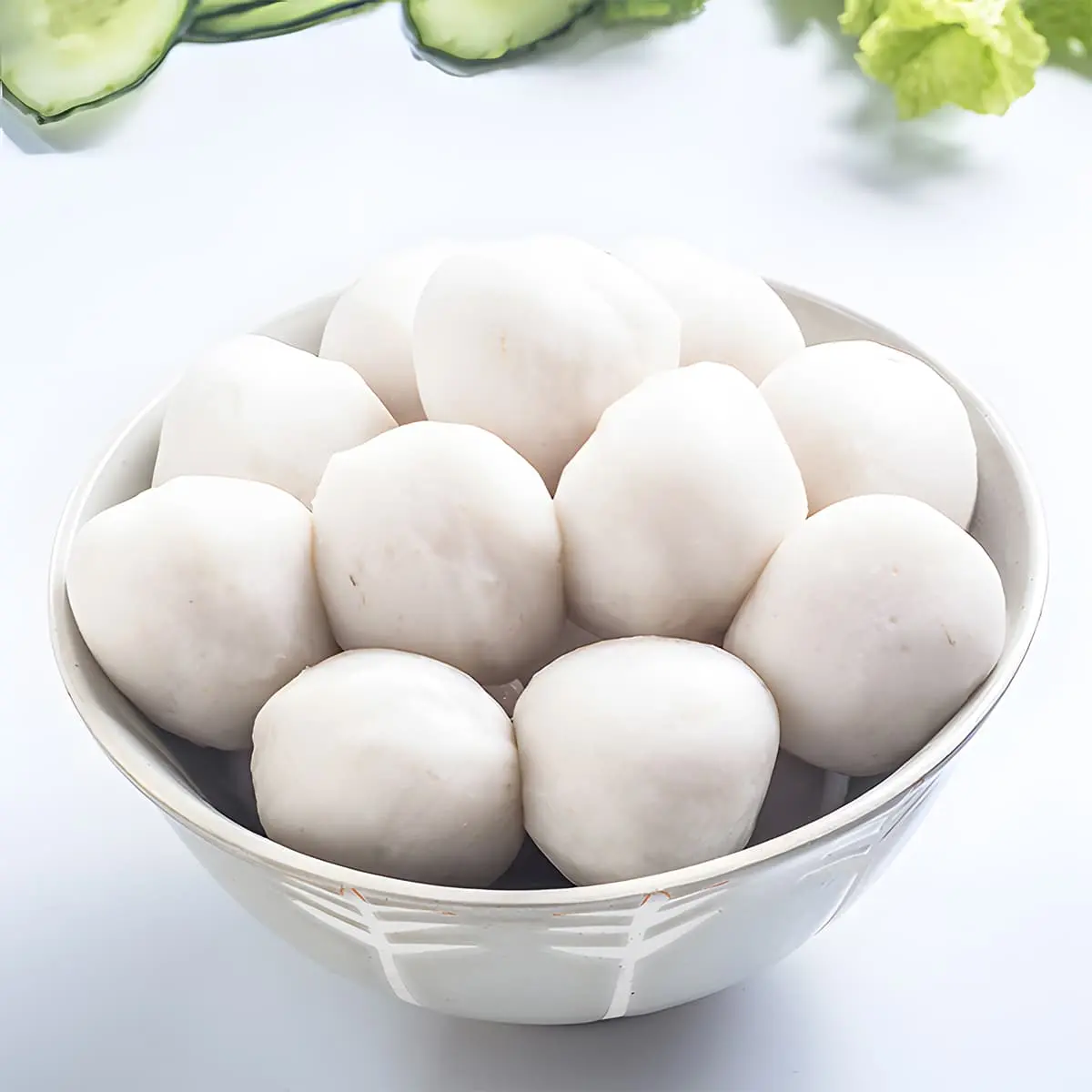
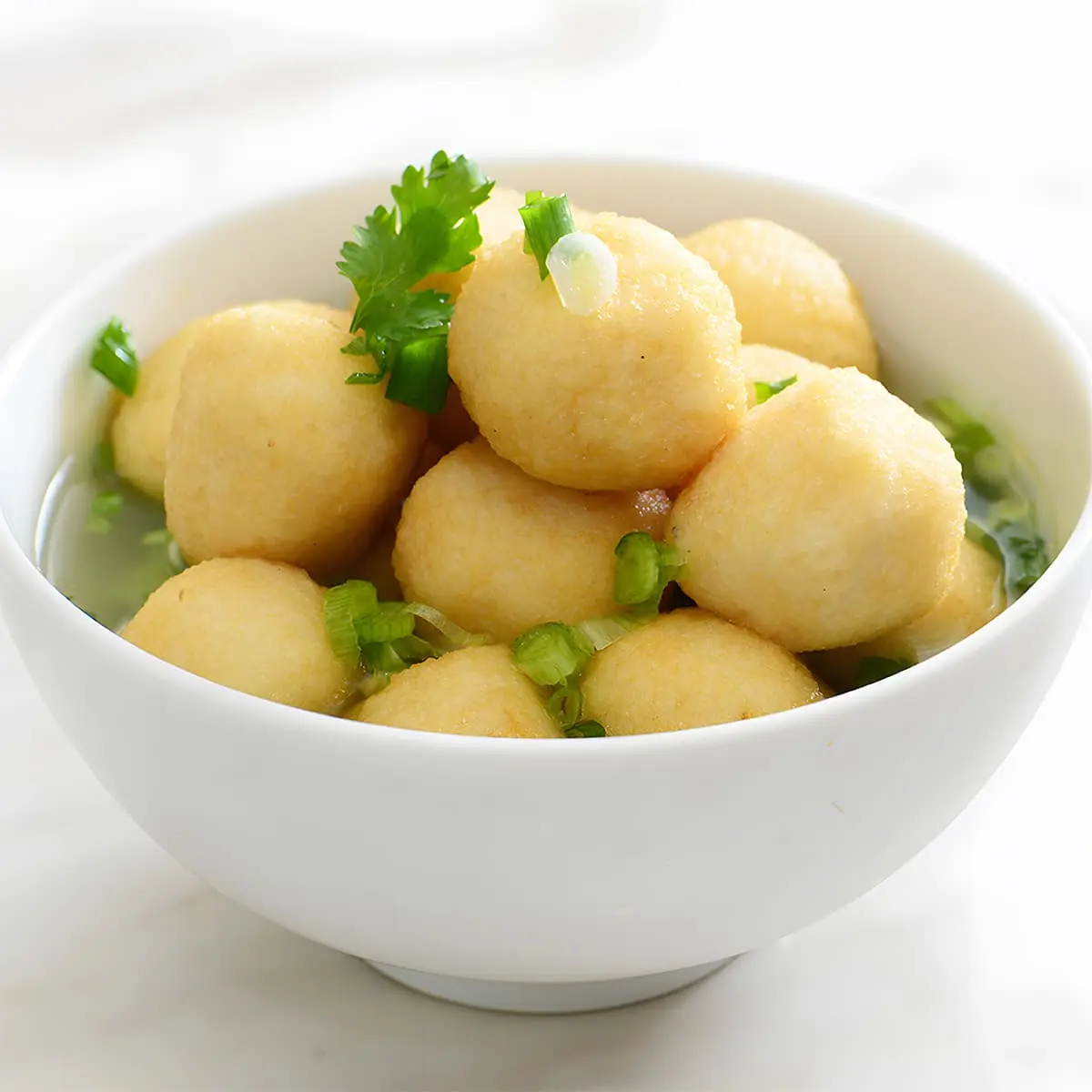
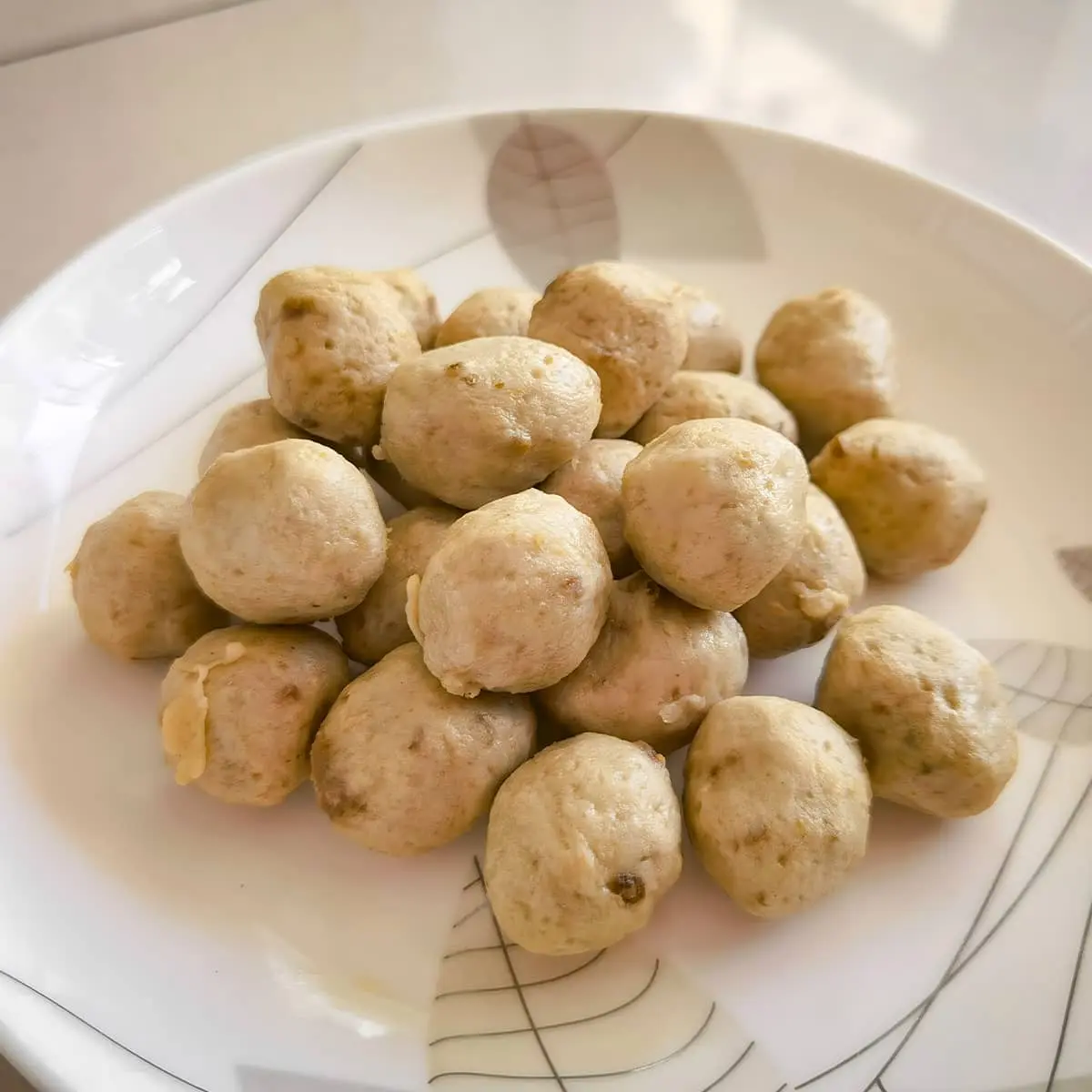
These are general serving suggestions. Ingredients, seasoning, texture and cooking requirements vary by brand and shop, so check the package.
How should you choose and cook fish balls?
Tip 1: Choose the dish, then choose the fish balls
The easiest way to choose is to start with what you are cooking.
- Try white fish balls in clear noodle soup, rice vermicelli or light broth.
- Try fried fish balls for Hong Kong–style curry fish balls or strong sauces.
- Choose dried tangerine peel fish balls for extra citrus aroma.
Choose the fish ball that works for the dish you have in mind.
Tip 2: Check the cooking time for each type
Size, packaging and preparation instructions vary. Follow the directions on the pack and make sure the fish balls are thoroughly heated before eating.
Small fish balls still need to be cooked through in hot pot. Follow the package directions and check doneness.
Tip 3: Season in stages when using a strong sauce
If using fried or dried tangerine peel fish balls with curry, shacha or another strong sauce, add seasoning gradually and taste as you go. Fish balls vary in how much seasoning they already contain. Too much sauce can overpower the fish.
Common mistakes when cooking fish balls
Mistake 1: Treating curry fish balls as a separate variety
Curry fish balls are a dish of fish balls served with curry sauce. The variety depends on the shop or recipe. Fried or white describe the balls themselves, while curry describes how they are served.
Mistake 2: Judging fish content or quality by colour
White, yellow or darker colouring tells you little about how much fish a product contains, its nutrition or quality. Compare the ingredient list, nutrition label and product information.
Mistake 3: Cooking every type of fish ball the same way
Cooking directions can differ depending on the type, size and whether the balls are chilled or frozen. Check the pack to see whether to thaw first and how to heat them.
Mistake 4. Ignoring Ingredients and Allergens
The term “fish balls” does not describe every ingredient. If you have a food allergy or need to avoid certain ingredients, check the ingredients and allergen information on the pack.
How to serve and pair fish balls
White fish balls in noodle soup
For a broth-based meal, add white fish balls to rice vermicelli, flat rice noodles or other noodles and add vegetables.
Fried fish balls with Hong Kong–style curry
Fried fish balls with curry are a familiar Hong Kong combination. Eat them on their own, add radish or serve them in cart noodles for a richer street-food flavour.
Dried tangerine peel fish balls in curry or hot pot
Dried tangerine peel fish balls work in curry, hot pot and noodle soup. If you are trying them for the first time, start with a simple broth or sauce to taste the citrus aroma clearly.
Compare different fish balls in one hot pot
Hot pot is an easy way for a family to compare white, fried and dried tangerine peel fish balls. Cook each type thoroughly according to the pack, then compare the flavour and texture.
Frequently Asked Questions
How many types of fish balls are there in Hong Kong?
There is no official count. Fish balls can be grouped by method, appearance, size, shape and flavour. White, fried and dried tangerine peel are common varieties, and shops can have their own names and categories.
What is the difference between white and fried fish balls?
White fish balls are usually pale, while fried fish balls turn yellow to golden after frying. White fish balls pair well with clear broth and hot pot. Fried fish balls often go with curry or strong sauces.
Are curry fish balls always made with fried fish balls?
Fried fish balls are common in Hong Kong curry fish balls, but the dish describes the sauce and can use other kinds of fish ball.
How do dried tangerine peel fish balls differ from regular fish balls?
Dried tangerine peel gives the fish balls a different aroma. Ingredient lists and proportions vary, so check the package for details.
Are dried tangerine peel fish balls healthier?
The ingredients, nutrition and portion sizes vary by product. Compare product labels for fat, sodium, protein or other nutrients.
Which fish balls are best for hot pot?
Choose to taste. White fish balls suit many broths, fried fish balls add a fried flavour and dried tangerine peel fish balls add a citrus aroma. Follow the cooking instructions on the package and heat thoroughly.
Summary
There is no fixed number of Hong Kong fish ball varieties. They can be grouped by preparation, appearance and flavour. Three familiar choices arewhite, fried and dried tangerine peel fish balls, each with its own uses.
Try white fish balls in clear broth, noodle soup or hot pot. Try fried fish balls in curry, cart noodles or strongly flavoured snacks. Choose dried tangerine peel fish balls for a citrus aroma. When shopping, compare the labels and cooking directions and choose to taste.
For related ingredients and recipes, seeChiu Chow White Fish Balls、Fried Fish Balls、Aged Tangerine Peel Fish Balls。
Further ReadingHow to air-fry fish balls。
For frozen ingredients or foods that need cooking, seeCentre for Food Safety guidance on cooking. Follow the cooking instructions on the pack.
Comments are closed.