
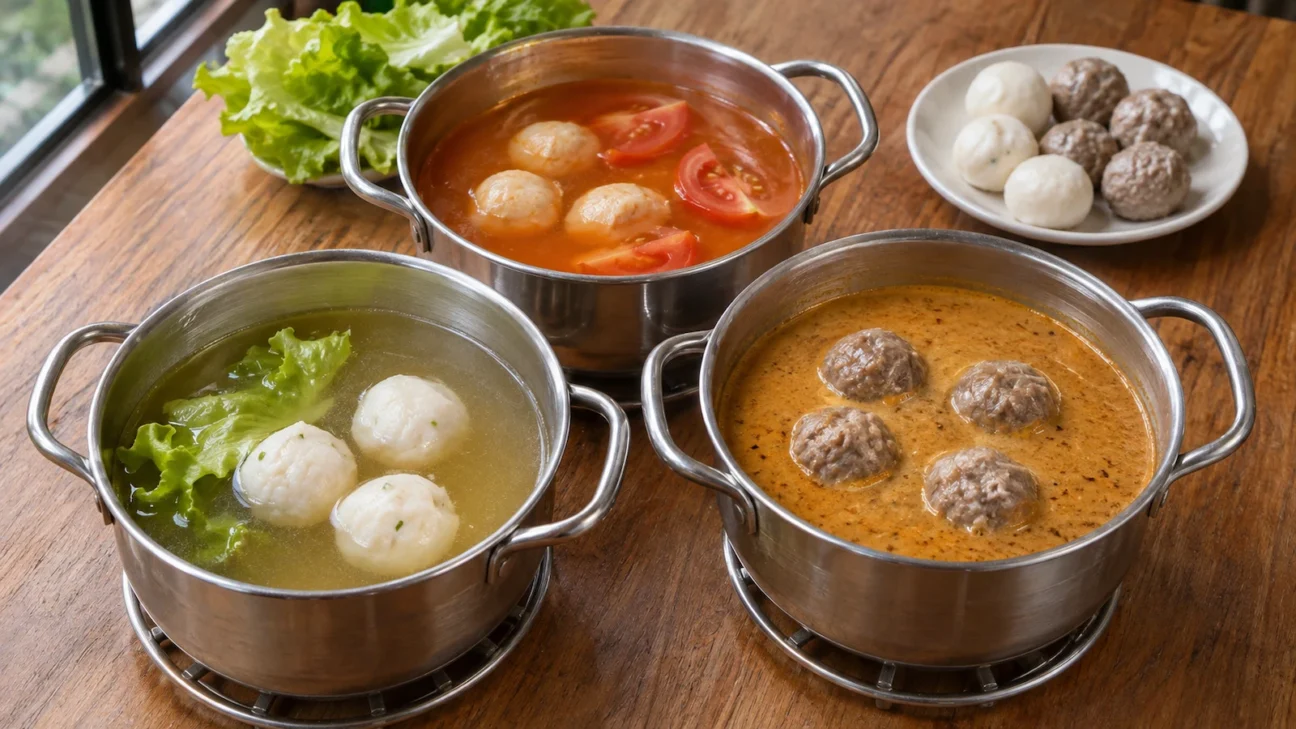
Choose a clear broth if you want to taste the fish balls and cuttlefish balls themselves. Try tomato broth for a sweet and tangy flavour, or pair beef balls or beef tendon balls with satay broth if you want something richer.
The choice comes down to this:Would you like the ingredients’ own flavours to stand out, or do you prefer a full-flavoured broth?Clear broth suits milder tastes. Tomato broth is sweet and tangy, while satay broth suits those who enjoy a richer flavour.
Compare three common broths and see how to pair them with fish balls, beef balls, cuttlefish balls and beef tendon balls.
Table of Contents
How to choose a broth based on the balls and your taste
Here are three ways to make a quick choice:
- To taste the balls themselves:Start with clear broth so the broth does not overpower the ingredients.
- For a bright, tangy pairing:Try tomato broth, especially if you like sweet and tangy flavours.
- For a rich, aromatic hot pot:Choose satay broth with beef balls or beef tendon balls.
Use these pairings as a guide. The flavour of each broth varies with the recipe and seasoning, and the texture of the balls varies by product.
How do clear, tomato and satay broths differ?
1. Clear broth: Good for tasting the ingredients themselves
Clear broth is easy to pair with different hot pot ingredients. A lightly seasoned clear broth lets you taste the balls’ own flavours.
If you especially enjoy the natural flavours of fish balls and cuttlefish balls, try them in clear broth first, then add a dip to taste.
Suggested pairing:Fish balls, cuttlefish balls, beef balls and beef tendon balls.
Clear broths can still be high in sodium or fat. Check the ingredients and nutrition label for the broth you are using.
2. Tomato broth: A sweet and tangy change
Tomato gives this broth its characteristic flavour. The balance of acidity and sweetness varies by recipe. Try it for more layers of flavour than clear broth without the richness of a heavier broth.
Tomato broth works with fish balls, cuttlefish balls and beef balls. Try these combinations if you like the tang of tomato alongside their flavour.
Suggested pairing:Fish balls, cuttlefish balls and beef balls.
Check the flavour description when buying the broth. If you are sensitive to acidity, taste a little before adding seasoning.
3. Satay broth: A rich, aromatic choice
Satay is familiar to many Hong Kong hot pot fans for its rich sauce and fragrant spices. Recipes vary by brand or restaurant, including how strong, sweet or spicy they are.
If you like rich flavours, try satay broth with beef balls or beef tendon balls. If you prefer milder flavours, cook one or two pieces first to see how much the broth comes through.
Suggested pairing:Beef balls, beef tendon balls and fish balls.
The name “satay broth” alone does not tell you the ingredients or allergens. For food allergies, read the package carefully or ask the restaurant.
Which broth goes with fish, beef, cuttlefish and beef tendon balls?
More than one broth can suit each type of ball. This guide suggests pairings based on the flavours and textures you might be looking for.
| Fish and meat balls | Flavour and texture preferences | Suggested broth | Why it works |
|---|---|---|---|
| Fish Balls | For tasting the fish balls themselves or pairing them with a tangy broth. | Clear broth or tomato broth | Clear broth lets the fish flavour stand out, while tomato adds a sweet and tangy note. |
| Beef Balls | For people who like the flavour of the balls and the broth to complement each other. | Clear broth or satay broth | Clear broth keeps the flavours distinct. Satay suits people who enjoy a more intense aroma. |
| Cuttlefish Balls | For tasting the cuttlefish balls themselves. | Clear broth or tomato broth | Clear broth lets the cuttlefish flavour come through. Tomato broth gives a tangy alternative. |
| Beef Tendon Balls | For people who enjoy a firm bite and want to compare mild and bold pairings. | Satay broth or clear broth | Choose satay for richness or clear broth to taste the balls themselves. |
Note: These are suggestions based on taste. They describe no specific product’s meat or fish content, recipe, ingredients or actual texture. Products vary, so check the package.
If your family prefers different flavours, try a divided hot pot with clear broth on one side and tomato or satay broth on the other.
Three tips for choosing and cooking fish and meat balls for hot pot
Tip 1: Decide whether you want the balls or the broth to stand out
Before you choose a broth, consider what you most want to taste: the balls themselves or the richness of the broth.
If you bought some balls you have never tried, taste them in a mild broth first to see how you like their flavour and texture. Then try tomato or satay.
With a divided hot pot, you can cook the same ball in both broths and compare them directly.
Tip 2: Cook the balls in batches and make sure they are cooked through
Add fish and meat balls in batches so you can keep track of what is cooked and avoid crowding the pot.
The size, chilled or frozen state and cooking instructions vary. Use the timing for the specific product rather than assigning one cooking time to every ball of the same name.
Hong Kong’s Centre for Food Safety advises cooking hot pot ingredients thoroughly and making sure larger pieces reach a core temperature of at least 75°C. After adding water or stock, bring the broth back to a boil and make sure the food is fully cooked before taking it out.
Follow the package instructions. Floating or a change in surface colour alone cannot confirm doneness.
Tip 3: Read the label and handle raw and cooked foods separately
For prepackaged fish and meat balls, check the product name, ingredient list, allergen information, date marking, storage instructions and cooking directions.
At the table, use separate utensils for uncooked and cooked ingredients to reduce the risk of cross-contamination.
If someone has a food allergy, check the ingredients in both the balls and the broth. Shared pots, utensils and dipping sauces can allow cross-contact.
Common hot pot mistakes to watch for
Mistake 1: Assuming every type of ball suits a strong broth
Satay has a rich flavour that may not suit everyone. Start with clear broth to taste the ingredients themselves, or try another broth if you prefer a stronger flavour.
Mistake 2: Relying on the name and overlooking the label
Ingredients in fish balls, beef balls and related products vary. Check the label for ingredients, meat or fish content and allergens.
If you have specific dietary needs, check the package first.
Mistake 3: Adding too many balls at once
A crowded pot can cause uneven cooking. Cook ingredients in batches by type and size, and wait until each batch is cooked through before eating it.
Mistake 4: Assuming the balls are done when they float
Balls can float before they are fully cooked. Follow the product instructions and check that the centre has heated through, particularly with larger pieces.
Three hot pot broths and which balls to serve with them
Pairing 1: Clear broth with fish balls and cuttlefish balls
For a milder hot pot, pair clear broth with fish and cuttlefish balls and add lettuce, Chinese cabbage or mushrooms.
This combination lets you taste the ingredients individually. Try them as they are after cooking, then add dipping sauce if you want it.
Pairing 2: Tomato broth with fish balls and beef balls
If you enjoy sweet and tangy flavours, try tomato broth with fish balls, beef balls and baby napa cabbage or other vegetables you like.
Acidity and sweetness vary by recipe. Taste the broth before adding more seasoning.
Pairing 3: Satay broth with beef balls and beef tendon balls
If you like rich flavours, cook beef balls and beef tendon balls in satay broth. Add vegetables, tofu or other hot pot ingredients you enjoy.
Satay broth and dipping sauces can both be strongly seasoned. Taste the cooked balls before adding other seasoning.
Hot pot broths and fish and meat balls: frequently asked questions
1. What hot pot broth goes best with fish balls?
For the fish balls’ own flavour, start with clear broth. For a sweet and tangy note, try tomato broth. Satay is another option if you like stronger flavours.
2. Do beef balls go better with clear or satay broth?
Both are worth trying. Clear broth lets you compare the beef balls’ own flavour. Satay suits people who enjoy a richer sauce. In a divided pot, cook the same kind of beef ball in both broths to compare.
3. Can I cook cuttlefish balls in tomato broth?
Yes. Sweet and tangy tomato broth adds another layer to the flavour of cuttlefish balls. To taste the cuttlefish itself more clearly, start with clear broth and then compare it with tomato.
4. Does satay broth always contain peanuts?
Recipes vary by brand and restaurant. If you have a peanut or other food allergy, check the ingredient and allergen labels or confirm with the restaurant.
5. Should I defrost frozen fish balls before hot pot?
Follow the product’s cooking instructions. Hong Kong’s Centre for Food Safety says some small frozen foods, including fish balls, can be boiled straight from frozen. Check each type of ball individually and cook it thoroughly.
6. Is clear broth always healthier than tomato or satay broth?
Nutrition depends on the recipe, seasoning and portion size. If you are watching your sodium or fat intake, read the nutrition labels on prepackaged broths and consider any sauces and ingredients you add.
Summary: Choose a broth that brings out the flavours you like
Choose a hot pot broth that suits your taste and the other people at the table.
Clear broth lets fish and cuttlefish balls stand out. Choose tomato for a sweet and tangy flavour, or try satay with beef balls or beef tendon balls for a richer combination.
Whatever you serve, read the labels on the broth and balls, handle the ingredients safely and separately from cooked food, and cook them through.
Next time you have hot pot with friends or family, compare a few broths and find the combinations you like best.
References
- Hong Kong Centre for Food Safety, Tips for Safe Hot Pot Consumption
- Hong Kong Centre for Food Safety, Frequently Asked Questions on Food Labelling
For related ingredients and recipes, seeHow to choose fish and meat balls for hot pot、what order to add hot pot ingredients。

Comments are closed.