
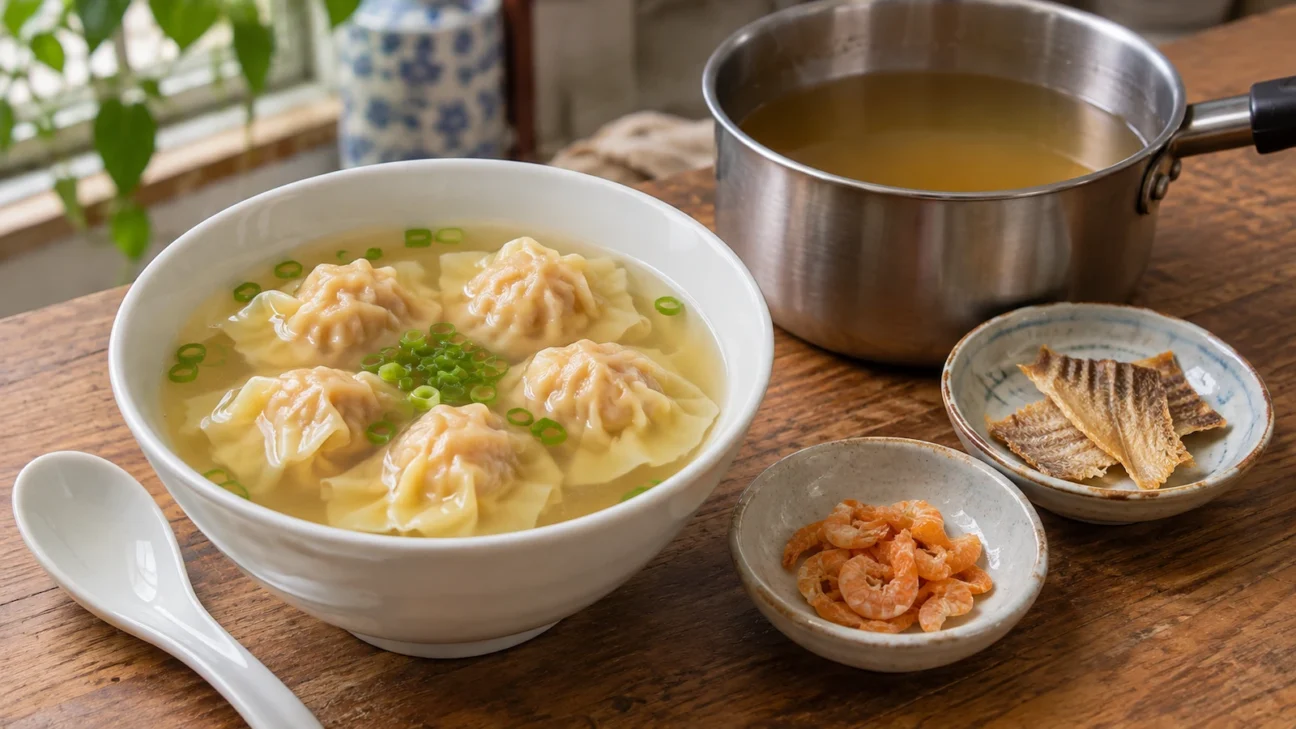
For the dried-fish aroma of a Hong Kong noodle shop, toast dried flatfish before simmering it. Use dried shrimp if you like the taste of shrimp, or clear chicken stock for a milder broth. Cook the wontons and noodles separately to keep the broth clearer.
Traditional Hong Kong wonton broth often brings to mind dried flatfish, dried shrimp and pork bones. At home, you can make a simpler broth with dried flatfish, dried shrimp or clear chicken stock, each with its own flavour.
Here are three ways to make Hong Kong–style wonton broth at home, with suggested ingredient ratios, timings and seasoning tips. Choose the version that suits the ingredients you have and the flavour you prefer.
Table of Contents
Three principles for making Hong Kong–style wonton broth
The basic method is to simmer dried ingredients or meat to extract their flavour, then strain the broth and season it to taste.Here are three simple options:
- Dried flatfish broth:Lightly toast the dried flatfish, then simmer it gently in water for a pronounced dried-fish aroma.
- Dried shrimp broth:Simmer dried shrimp to bring out their savoury seafood flavour. Choose this version if you enjoy the taste of shrimp.
- Clear chicken broth:Simmer chicken bones or start with ready-made clear chicken stock. This milder broth pairs easily with different wonton fillings.
Some traditional Hong Kong wonton noodle broths combine dried flatfish, dried shrimp, shrimp shells and pork bones. These recipes are simplified for home kitchens. Individual wonton noodle shops have their own recipes.
For any version, bring the broth to a boil, reduce the heat and simmer gently. Strain out the solids and season at the end. Cook the wontons and noodles separately so flour or starch does not cloud the broth.
What makes a good wonton broth?
A good wonton broth complements the wontons. Season lightly enough to taste both.
Three characteristics help explain the differences between these broths.
1. Clear broth with a smooth mouthfeel
Many traditional Hong Kong wonton noodle broths are deliberately clear. Control the heat, skim off the foam as it rises and strain the finished broth to remove impurities.
2. Different ingredients bring out different flavours
Toasting dried flatfish gives the broth a dried-fish aroma. Dried shrimp adds a more distinctive shrimp flavour. You can use either ingredient on its own or combine them.
Clear chicken stock gets its flavour from chicken meat or bones. It works well at home if you prefer the flavour of dried seafood to be less pronounced.
3. Keep the seasoning simple
Salt, a little light soy sauce and ground white pepper are all useful. If the broth already tastes good, you may only need some of them.
Taste the plain broth first and add seasoning a little at a time so it does not overpower the dried flatfish or shrimp.
Dried flatfish, dried shrimp and clear chicken stock compared
If you are making wonton broth for the first time, compare the flavour, cooking time and pairings for each version.
| What to Compare | Dried flatfish broth | Dried shrimp broth | Clear chicken broth |
|---|---|---|---|
| Main ingredients | Dried flatfish | Dried shrimp | Chicken bones or clear chicken stock |
| Flavour | Pronounced dried-fish aroma | Distinct shrimp aroma and concentrated savoury flavour | Milder chicken flavour |
| Home cooking method | Toast until fragrant, then simmer gently | Rinse, soak to soften if needed, then simmer to extract the flavour | Simmer chicken bones or use ready-made stock |
| Approximate time | About 30 to 40 minutes | About 20 to 30 minutes | About 60 to 90 minutes from scratch or about 10 minutes with ready-made stock |
| Pairs well with | Shrimp wontons and Hong Kong–style wonton noodles | Shrimp wontons and pork wontons | Pork wontons, vegetable-and-pork wontons and noodle soup |
| Best Occasions | When you have time to recreate a traditional flavour | When you want a seafood broth with fewer ingredients | Quick cooking and everyday family dinners |
The times are estimates for home cooking. They exclude wrapping the wontons and cooking the noodles. Actual timings depend on ingredient size and quantity, cookware and heat.
How to make all three wonton broths
The recipes make roughly two to three bowls of wonton soup. The ingredient ratios are starting points for home cooking. Adjust them to taste.
Recipe 1: Dried flatfish wonton broth with a strong dried-fish aroma
If you like the traditional dried-fish aroma of Hong Kong wonton noodles, start with the dried flatfish version. Toast the fish first, then simmer it gently to draw out the flavour.
Suggested ingredients:
- About 10 to 15 g dried flatfish
- About 1 litre water
- 2 slices of ginger, optional
- Salt, to taste
- A little light soy sauce, optional
Method:
- Inspect the dried flatfish and clean its surface according to the package or supplier’s instructions.
- Heat a dry wok, reduce to medium-low heat and gently toast the dried flatfish until fragrant. Watch the heat so the fish does not burn.
- Place the flatfish in a suitable soup bag and add it to a stockpot with the water and sliced ginger.
- Bring to a boil, reduce the heat and simmer for about 30 to 40 minutes to draw out the flavour.
- Remove the soup bag and carefully strain out all the fish bones, fragments and other solids.
- Taste first, then adjust with a little salt or light soy sauce.
Flavour and serving suggestions:Dried flatfish broth pairs well with shrimp wontons or thin Hong Kong–style egg noodles. If the dried-fish aroma is too strong, use less flatfish next time or dilute the broth with water to taste.
Tips:Dried flatfish burns easily over high heat, and charred pieces can affect the flavour. Toast it gently and make sure no bone fragments remain in the finished broth.
Recipe 2: A simple dried shrimp wonton broth
If you have dried shrimp at home, you can use them to make broth without buying dried flatfish. This version uses fewer ingredients and has a shrimp aroma that pairs well with shrimp or pork wontons.
Suggested ingredients:
- About 15 to 20 g dried shrimp
- About 1 litre water
- 2 slices of ginger
- Salt, to taste
- A little ground white pepper, optional
Method:
- Inspect the dried shrimp and rinse or prepare them as directed on the package to remove any surface impurities.
- If the shrimp are particularly hard and dry, soak them in water until slightly softened, then drain.
- Add the dried shrimp, ginger and water to a stockpot.
- Bring to a boil, reduce the heat and simmer for about 20 to 30 minutes. Taste as it cooks to gauge the strength.
- Strain the broth through a fine sieve to remove the dried shrimp and any other solids.
- Season at the end with a little salt or ground white pepper to taste.
Flavour and serving suggestions:The broth has a distinct shrimp flavour. Serve it with shrimp wontons, pork wontons or choy sum.
Tips:Dried shrimp vary in size, dryness and saltiness. Start with a smaller amount and taste the broth before adding salt.
Recipe 3: A mild, everyday wonton broth with clear chicken stock
Clear chicken broth suits anyone who prefers a milder flavour or wants to cook without dried flatfish and shrimp. Simmer chicken bones or save time with ready-made clear chicken stock.
Suggested ingredients for homemade chicken stock:
- About 400 to 500 g chicken bones
- About 1.2 litres water
- 2 slices of ginger, optional
- Salt, to taste
- A little ground white pepper, optional
Method:
- Blanch the chicken bones, discard the blanching water and rinse off any scum clinging to the bones.
- Add about 1.2 litres of water, the chicken bones and the ginger to a clean stockpot.
- Bring to a boil, skim off the scum, then reduce the heat and simmer for about 60 to 90 minutes.
- When the broth has developed its flavour, strain out the bones and other solids.
- Taste and add a little salt or ground white pepper if needed.
Quick version:If you are short on time, heat about 1 litre of ready-made clear chicken stock with sliced ginger. Simmer gently for about 5 to 10 minutes and adjust to taste. Check the ingredients, seasoning and allergen information first, as formulations vary by product.
Flavour and serving suggestions:Clear chicken broth has a milder flavour that pairs with pork, vegetable-and-pork or shrimp wontons, as well as thin egg noodles.
Tips:For a clear broth, skim off the scum while simmering the chicken bones, avoid a prolonged rolling boil and strain the finished broth through a fine sieve.
How to choose and make your wonton broth
Choose among the three broths based on the flavour you enjoy and the wonton filling you are serving.
Tip 1: Choose the broth to suit the wonton filling
For shrimp wontons, try dried flatfish or dried shrimp broth to accentuate the seafood aroma.
For pork or vegetable-and-pork wontons, try clear chicken broth so the filling’s own flavours come through.
For a richer traditional Hong Kong flavour, simmer small amounts of dried flatfish and shrimp together. Use a little less of both the first time and adjust in future batches.
Tip 2: Simmer first and season at the end
Ingredients release flavour as they simmer. Adding a large amount of salt or light soy sauce at the start can make the finished broth too salty.
An easier method is to finish cooking the broth, strain and taste it, then add seasoning a little at a time.
If you use ready-made clear chicken stock, taste it first. Its formulation and seasoning vary by brand.
Tip 3: Cook the broth, wontons and noodles separately
Use two pots to keep the broth clear:
- First pot:Simmer the broth and keep it hot.
- Second pot:Cook the wontons and noodles separately in plain water.
Cook the wontons thoroughly, especially if filled with raw meat or raw shrimp. Adjust the cooking time based on their size, filling and product instructions. Floating to the surface does not confirm that the filling is cooked through.
Transfer the cooked wontons to a bowl, add the cooked noodles and pour over the hot broth just before serving. This keeps the broth clearer and prevents the noodles from softening in it for too long.
Five common mistakes when making wonton broth
Mistake 1: Burning the dried flatfish when toasting it
Problem:Over-toasting the dried flatfish can give the entire pot a bitter, burnt taste.
How to fix it:Toast over medium-low heat until fragrant. If the fish burns badly, start again with another piece.
Mistake 2: Using too much dried shrimp
Problem:An overly strong shrimp flavour can overpower the wonton filling or make the broth too salty.
How to fix it:Use less dried shrimp. Simmer a small test batch to check the strength and adjust the ratio to taste.
Mistake 3: Boiling the broth too hard
Problem:A prolonged rolling boil can disperse scum and small particles throughout the broth and make it cloudy.
How to fix it:Bring the broth to a boil, then reduce the heat to a simmer as directed in the recipe. Skim as it cooks and strain thoroughly at the end.
Mistake 4: Cooking the wontons and noodles in the broth
Problem:Starch from the wonton wrappers and noodles can cloud the broth.
How to fix it:Cook the wontons and noodles separately in plain water. Add the hot broth just before serving.
Mistake 5: Adding a lot of seasoning before tasting
Problem:Dried ingredients and ready-made stock may already contain salt. Extra seasoning can make the broth too salty.
How to fix it:Taste the finished broth, then add seasoning in small amounts until it tastes right.
How to serve and pair wonton broth
You can use the broth for more than wonton noodles. Here are a few everyday serving ideas.
1. Shrimp wonton soup
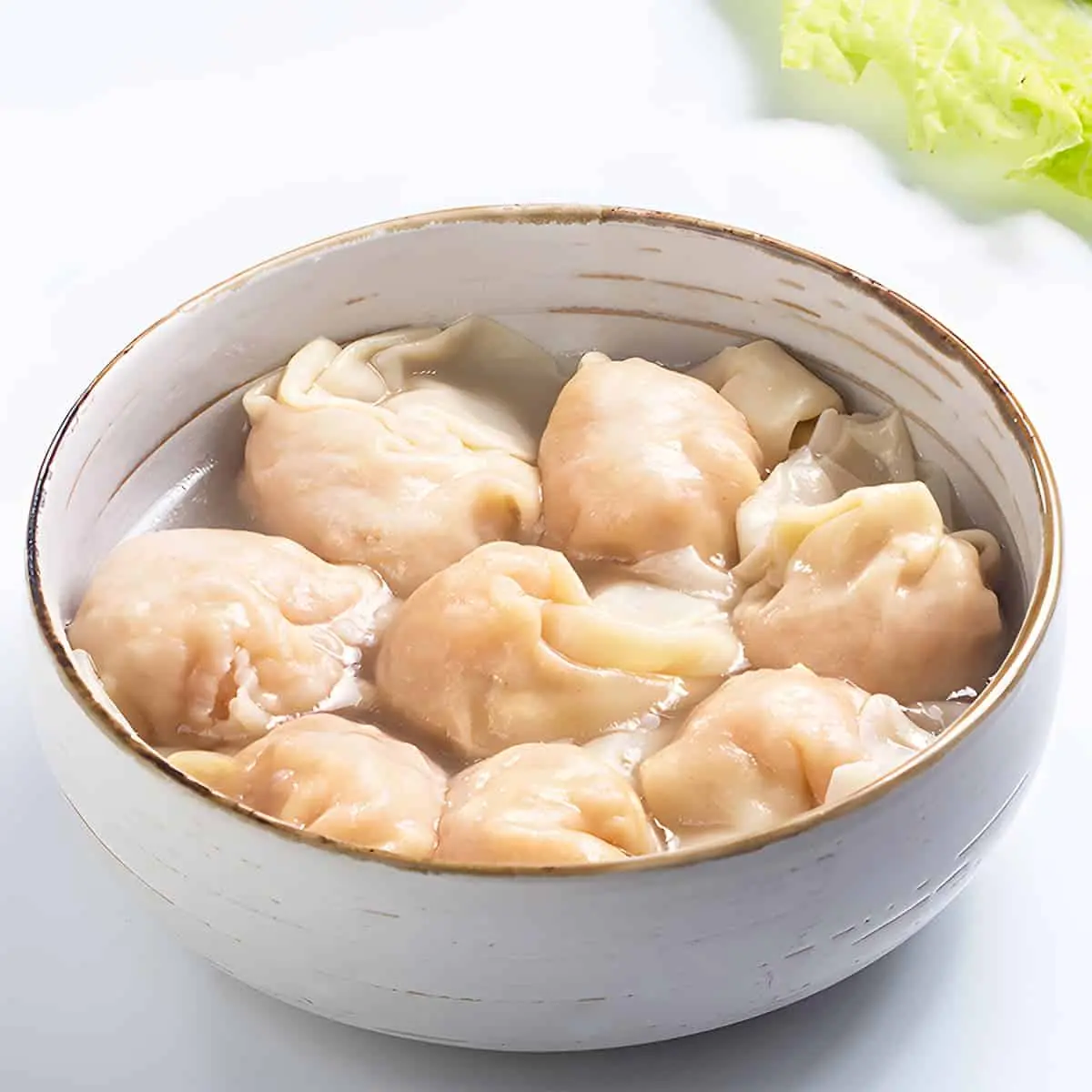
Place cooked shrimp wontons in a bowl and add hot dried flatfish or shrimp broth. Garnish with a little yellow garlic chive or chopped spring onion, to taste.
Serving the broth without noodles lets you focus on the wonton filling and the broth’s aroma.
2. Hong Kong–style wonton noodles
Try a classic Hong Kong combination at home with shrimp wontons, thin egg noodles or bamboo-kneaded noodles, and dried flatfish broth.
To keep the noodles springy, follow the package directions and drain them before adding them to the wontons and hot broth. Serve promptly so they do not soften.
3. Wontons with choy sum
Add cooked choy sum or baby pak choy to the wontons. Clear chicken broth is a mild choice with vegetable-and-pork wontons and choy sum. Dried shrimp broth gives the greens a seafood flavour.
4. Simple homemade noodle soup
If you have no wontons on hand, use the finished broth with egg noodles, rice vermicelli or another noodle you like.
Methods and timings vary by noodle. Follow the product instructions.
Wonton broth: frequently asked questions
Q1. Do I have to use dried flatfish for wonton broth?
Some traditional Hong Kong wonton noodle broths use dried flatfish for its dried-fish aroma. At home, you can also use dried shrimp, chicken bones or clear chicken stock, depending on the flavour and style you want.
Q2. Can I simmer dried flatfish and dried shrimp together for wonton broth?
Yes. Some Hong Kong wonton noodle broths combine the two to bring out both the dried-fish aroma and the shrimp flavour. The first time, use less of each, taste the finished broth and decide whether to increase the amounts next time.
Q3. Should I toast dried flatfish before making wonton broth?
Many recipes toast the dried flatfish before simmering to bring out a roasted aroma. Control the heat to avoid burning. Check the condition of the fish you bought and follow the supplier’s preparation advice.
Q4. Should I soak dried shrimp before making broth?
It depends on their size and how dry they are. Soak hard, dry shrimp until slightly softened. Smaller shrimp can go straight into the broth after rinsing, according to the preparation instructions. Either way, check for grit or other impurities.
Q5. Why is my homemade wonton broth cloudy?
Common causes include boiling too hard, failing to skim or strain the broth, and cooking wontons and noodles directly in it. For a clearer broth, cook the wontons separately, control the heat and strain the broth through a fine sieve when finished.
Q6. Can I use ready-made clear chicken stock for wonton broth?
Yes. Ready-made clear chicken stock works for a quick meal. Heat it and add ginger or other ingredients to taste. Formulations and seasoning vary by brand. Check the ingredients, allergens and cooking instructions, especially if you need to avoid specific ingredients.
Summary: Pick the broth that suits your taste
You can make a good wonton broth at home with a short ingredient list and straightforward steps.
Try dried flatfish for the traditional dried-fish aroma, dried shrimp for a more pronounced shrimp flavour or clear chicken stock for a mild broth that is easy to pair.
Prepare dried ingredients properly, simmer gently and season to taste at the end. Cook the wontons and noodles separately for a clear Hong Kong–style broth with the flavour you want.
Choose one broth for your first batch. Once you know how strongly each ingredient flavours the broth, try combining dried flatfish, dried shrimp or chicken stock and adjust the amounts to suit your taste.
Ingredient note: The amounts and times above are a home-cooking guide. For the actual ingredients, allergens and preparation instructions for dried flatfish, dried shrimp, ready-made chicken stock and wontons, consult the package or supplier. Thoroughly cook any wontons filled with meat or seafood before serving.
For related ingredients and recipes, seePrawn Wontons、How to cook frozen wontons without splitting the wrappers。
For general food safety advice on cooking, seeCentre for Food Safety guidance on cooking。
Comments are closed.